
【The 24th Young Scholars Series of Medical Humanities Forum】Emily Graf: A History of Anatomical and Pathological Collections in China
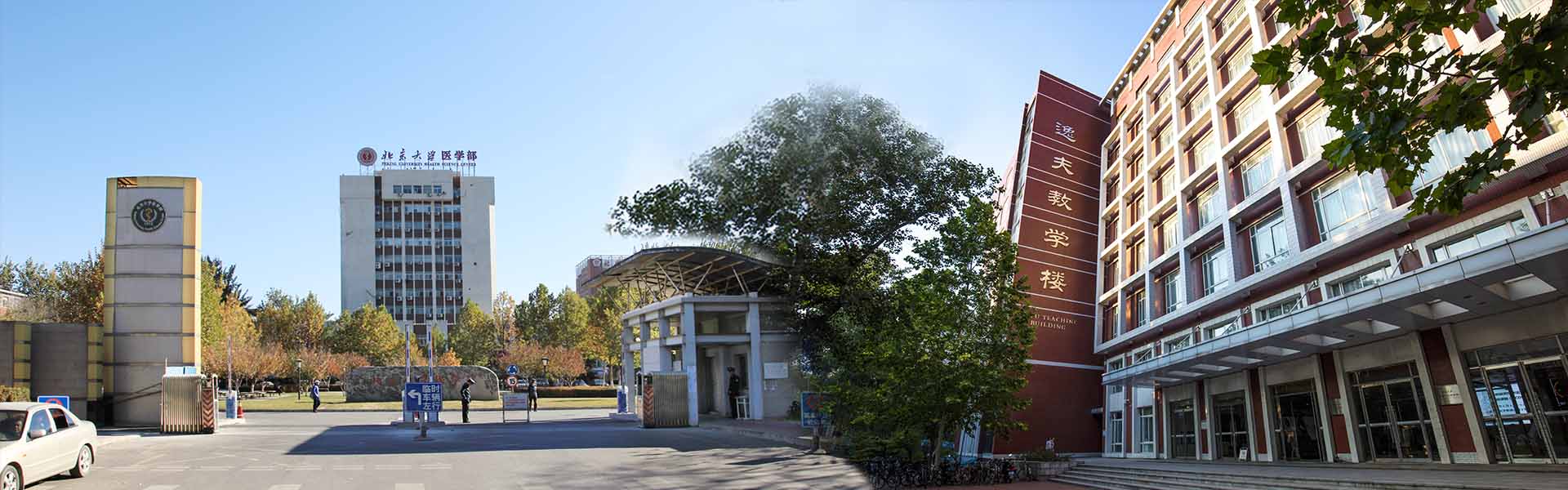
On the morning of April 7, 2026, the 24th Young Scholars Series of Medical Humanities Forum titled The Materiality of Medical Science: A History of Anatomical and Pathological Collections in China, was held in Room 620, Yifu Building. The lecture was organized by the School of Health Humanities at Peking University. The presenter was Professor Emily Graf from the Department of Sinology at the University of Tübingen, Germany. The session was moderated by Associate Professor Su Jingjing from Peking University’s School of Health Humanities. Discussants included Professor Chen Chunhua from Peking University’s School of Basic Medical Sciences and Associate Professor Chen Qi from the School of Health Humanities. Over ten faculty members and students from Peking University and other institutions attended the lecture.
Professor Graf began by reviewing the development of memorial ceremonies for anatomical donors since the 20th century. In recent years, new objects and elements have been introduced and associated with specific spatial arrangements, creating new associations while continuing traditions. She noted that such ceremonies are globally prevalent, blending political and religious elements within a complex, multicultural context.
Professor Graf then posed a series of core questions: Where does medical knowledge arise, and how is it transmitted? How was the “normal” and the “pathological” not simply discovered but produced in macroscopic and microscopic collections of medical schools in China? By whom, how, and why? She acknowledged that her theoretical framework is inspired by works such as Laboratory Life: The Construction of Scientific Facts and by Georges Canguilhem's view that “normal” and “pathological” are normative states, not pre-existing scientific facts, thus emphasizing the constructed nature of “normality”.
Addressing these questions, Professor Graf used case studies of pathological specimen collections in various regional hospitals to examine the central concern: “How do these collections construct the binary order of normal and pathological in medical knowledge?” The first case study, based on a 1940 manuscript from the German Consulate, investigated the history of Shanghai’s Paulun Hospital (1899–1945). Before 1913, obtaining corpses for autopsy in the hospital was hindered by laws. It was not until 1924 that a new contract was signed with the Shanghai court, providing a legal way. During this period, there were setbacks such as bombings by the Japanese army, destruction of the collections and their relocation. Finally, relevant approval was obtained in 1933. However, as a foreign hospital, its actual implementation effectiveness was limited, and there were also issues regarding the unclear definition of intellectual property rights in the early stage of Sino-foreign medical cooperation. In the second case study, Professor Graf traced the historical changes in the pathology specimen collection system at Shanghai Medical College, Fudan University. Analyzing a 1930 fetal autopsy report, she identified gaps between archival records and published research, questioning the accuracy of original diagnoses. Early specimens lacked systematic documentation, and some significant discoveries survived only through academic exchanges. A 1932 case report, which included the patient’s race and family history, revealed the racist logic embedded in contemporary medical standards. Using the Qingdao Medical College as a backdrop, Professor Graf presented a 1996 institutional history case study of a “worker-peasant-soldier” student, detailing the specifics of anatomy classes and the transformation from “barefoot doctor” to anatomist. The lecture also discussed the evolution of the Human Anatomy Museum at Peking University Health Science Center and the efforts of medical figures like Yen Fu-Ch‘ing(Yan Fuqing) and Ku Ching-chien(Gu Jingqian) to establish specimen repositories and donate their own bodies to advance specimen collection.
At the lecture’s conclusion, participants engaged in discussions on topics such as the similarities and differences between Chinese and German body donation procedures, the boundaries of specimen collection and use, and challenges in modern research ethics. Anatomical and pathological collections first and foremost aimed to be permanent, stable databanks for medical research and teaching. These collections not only actively produced the “normal” and “pathological” as scientific “facts”, they also were used to embody a “vision” for a new medical paradigm yet to be produced. Specimen collections are a materialization of medical knowledge and a critical component in constructing medical authority and legitimacy. This lecture provided further insights into the study of the material culture of medicine.
Written by | Yifan Gao
Reviewed by | Jingjing Su
